
The aufruf is in three weeks. Your son is getting the aliyah, the whole mishpacha is coming in, the sheva brachos are stacking up, and someone just asked where everyone’s staying. If your stomach just dropped a little reading that — welcome. Every family hosting a simcha weekend knows this moment. The simcha is joy; the logistics are a full-time job.
Here’s the good news: the housing question has a right answer, and it’s not twelve hotel rooms.
The Simcha Headquarters Concept
Think of a simcha weekend not as a series of events but as a campaign — and every campaign needs a headquarters. A place where the family gathers between events, where the out-of-towners drop their bags, where Friday night’s tish materializes, where someone can always find coffee and a couch.
A hotel can’t be a headquarters. Twelve rooms on four floors isn’t a gathering place; it’s a diaspora. People text “where is everyone?” all weekend. The lobby becomes a sad waiting room. Nobody’s together unless there’s a scheduled event.
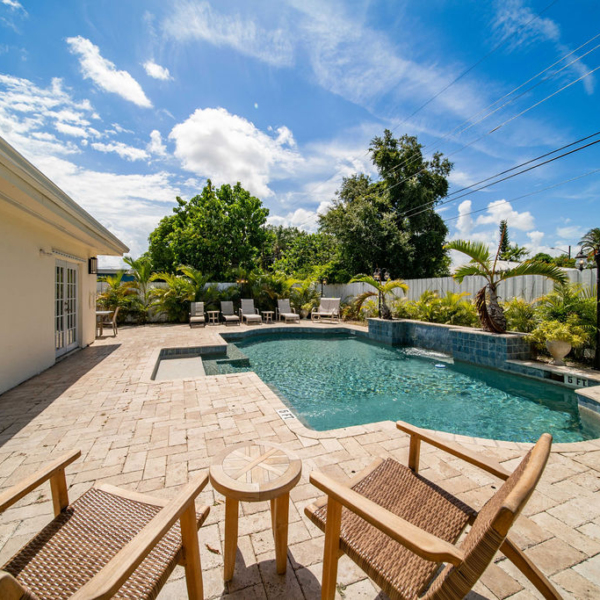
A villa is a headquarters. One address. One kitchen churning out food all weekend. One living room where the cousins end up at midnight, talking the way cousins talk when there are no parents’ bedtimes to observe. The simcha doesn’t pause between events — it continues, in the house, which is exactly how simchas are supposed to feel.
The Aufruf Weekend, Done Right
Let’s get specific. Aufruf weekend: your son, your shul, Friday night and Shabbos day, plus sheva brachos Sunday.
Friday: Out-of-town family arrives throughout the day and comes straight to the villa — not to a hotel lobby, to a house, where there’s already food out and someone’s glad to see them. That evening, the tish happens in the living room or the backyard. Singing, l’chaims, divrei Torah, the chosson’s friends packed shoulder to shoulder. Try that in a hotel conference room (if they’d even let you).
Shabbos: The whole mishpacha walks to shul together — grandparents, cousins, the little ones — and comes home to a seudah that actually fits everyone. One long table. The sheva brachos benchers. The speeches. Nobody’s watching the clock because the restaurant needs the room.
Sunday: Sheva brachos brunch in the villa’s dining room or yard. People linger. Nobody’s hauling suitcases through a lobby at 11 a.m. checkout. The weekend ends the way it should: slowly, with hugs in a driveway, not a parking garage.
Sheva Brachos Nights, Brissim, and Everything Else
The same logic holds for every simcha format:
Sheva brachos: Hosting one night at the villa means a real dining room, a real kitchen for the caterer to work in, and space for the 40 people who show up. (They always show up. Plan for 40.)
A bris: Morning bris, everyone comes back to the house for the seudah. The baby sleeps in a real bedroom. The grandparents have somewhere quiet to sit. You’re not herding 25 people through a restaurant.
An upsherin or bas mitzvah: The cousins come for the weekend, the kids have a yard to destroy, the adults have a porch to recover on. The simcha breathes.
In every case, the villa does something a hotel fundamentally can’t: it lets the simcha be residential. People live in it, not just attend it.
The Logistics That Actually Matter
A few practical notes from families who’ve done this:
Sleeping arrangements: A 4–5 bedroom villa sleeps 10–14 with air mattresses and pack-and-plays. That’s the core family plus grandparents. Everyone else takes nearby rentals or hotels — but the villa remains HQ.
The kitchen question: For a simcha weekend, you’ll likely use a caterer or takeout for the big meals. Make sure the villa’s kitchen can handle it: counter space for staging, a second fridge for trays, and room for the caterer’s staff to work. Ask the host specifically — “we’re hosting sheva brachos for 40, can your kitchen handle a caterer?” is a completely normal question.
Noise and neighbors: A house full of celebrating family gets loud. A villa with a yard absorbs it; a hotel room amplifies every complaint. Your simcha shouldn’t come with a noise warning from the front desk.
The Eruv/Shabbos factor: If the simcha includes Shabbos, the villa’s advantages multiply — no key cards, no elevators, room for everyone at the table. (See our Shabbos test article for the full breakdown.)
The Emotional Math
Here’s what it really comes down to. Years from now, nobody will remember which hotel had the nicer lobby. But everyone will remember the midnight cousin session in the living room. The grandmother holding court at the head of the table. The singing that went too long and nobody wanted to stop.
Simchas are made of those moments, and those moments need a house. Not rooms — a house. One roof, one table, one weekend where the whole mishpacha is finally, actually together.
If you’re planning a simcha in the Lakewood area, talk to the LakewoodHosts team about a headquarters villa — they’ve hosted their share of aufrufs and sheva brachos weekends, and they know which houses handle a caterer, which yards fit a tish, and how to make 14 people comfortable under one roof. Mazel tov — now go enjoy it instead of managing it.